A manufacturing-side guide for brands, buyers and retailers turning an idea into clear, verifiable product requirements.
In July 2026, the U.S. back-to-college market produced a demand signal directly relevant to fabric storage. The National Retail Federation expects college students and their families to spend a record $103.5 billion this year, up from $88.8 billion in 2025. Based on the two published figures, that is an increase of about 16.6%. Respondents plan to spend an average of $1,437.79, including $194 on dorm or apartment furnishings, or roughly $14.0 billion in total. The survey covered 7,677 consumers and was fielded July 1–8.
These figures represent purchasing intentions, not completed sales. However, when viewed alongside current retailer merchandising and a global product launch, they create a credible sourcing case for portable fabric storage designed around dorm rooms, rentals and frequent moves.
Storage moves into the back-to-college merchandising plan
Target said on July 22 that college shoppers would find dorm-room storage, décor and bathroom essentials starting at $5. It also plans to expand move-in events to nearly 150 stores on August 16. Walmart’s July 15 Back-to-College announcement likewise lists organization solutions among products designed for campus life.
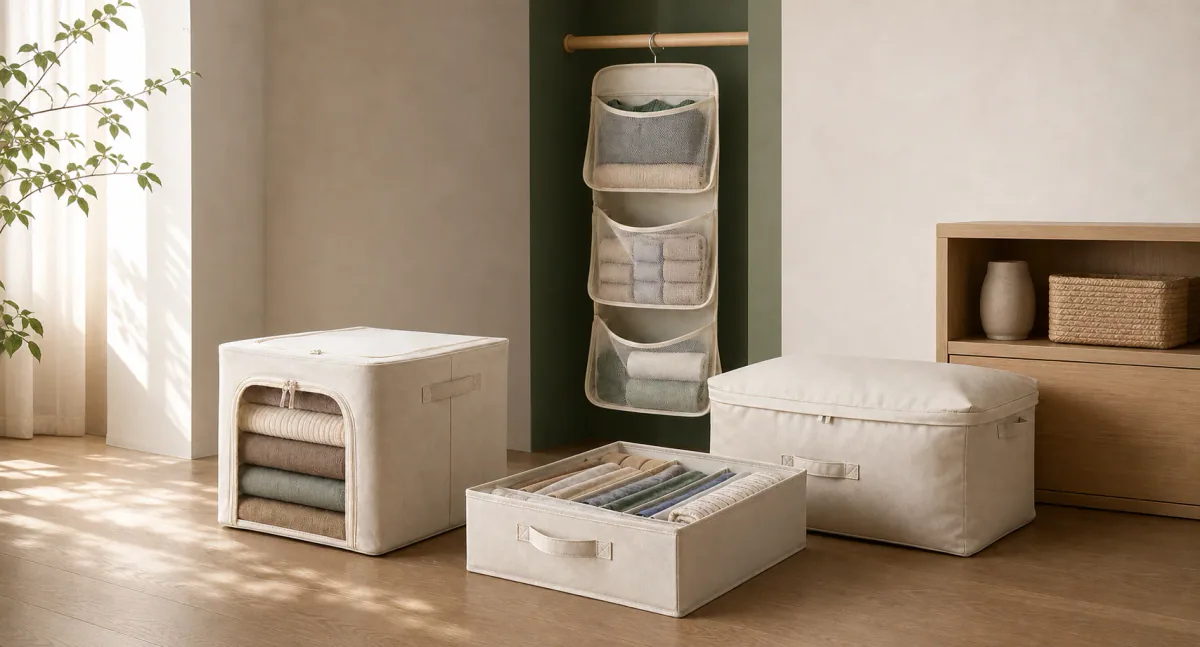
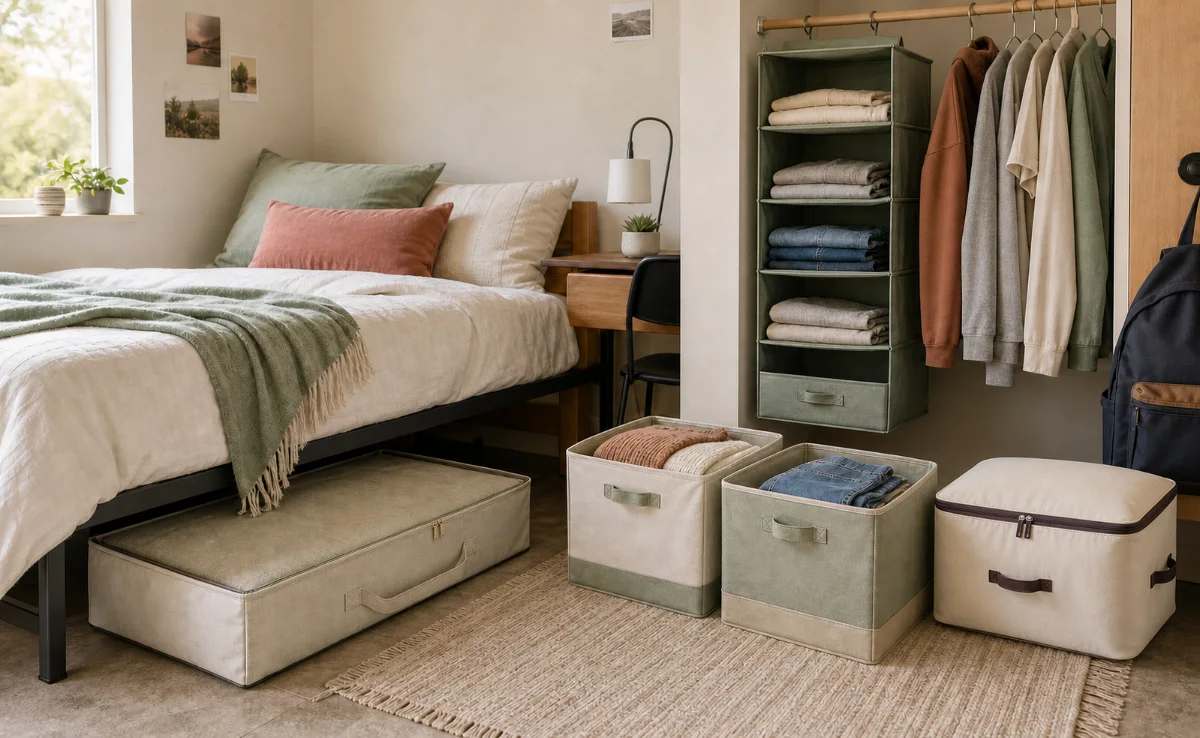
These announcements do not prove that any specific fabric organizer is already a bestseller. They do show that major retailers are merchandising storage as a dedicated move-in category rather than an incidental part of the general home aisle. Buyers should therefore define use cases—under-bed, wardrobe, over-door and shelf storage—instead of sourcing a generic “home organization” assortment.
A global launch validates portable, foldable and move-ready design
On July 14, IKEA announced KOMPISHÄNG, an 11-piece collection scheduled for a global launch in August 2026 and aimed at young urban renters. The range was informed by visits with people aged 20–28 in central London. One hanging wardrobe organizer converts into a carry bag with a zip. The collection is scheduled for an early U.S. store window from July 31 through August 14, followed by online availability on August 15.
This is not evidence of total category growth, but it validates a specific product brief: storage must work in the room and during the next move. For fabric products, folded volume, handle reinforcement, zipper geometry and structural stability after repeated carrying matter as much as appearance.
How should importers and retailers translate the signal into specifications?
A dorm and small-space sourcing brief should define:
- Placement: under the bed, inside a wardrobe, over a door or on an open shelf;
- Contents: bedding, seasonal clothing, shoes, bags or daily accessories;
- Carrying requirements: one-person handling, reinforced handle positions, suggested load and zipper path;
- Space efficiency: folded dimensions, filled outer dimensions, pieces per carton and container utilization;
- Channel constraints: target retail price, shelf dimensions, parcel-shipping limits and likely return scenarios;
- Visual system: dorm-friendly neutral colors, coordinated assortments and easy-to-read size communication.
Promotional price pressure does not remove the need for sound construction. Handle stitching, reinforcement at load points, zipper performance, body support and cleaning instructions can directly affect returns during a concentrated move-in period.
The main risk: planned spending is not sell-through
NRF reports consumer intentions. Target, Walmart and IKEA describe their own merchandising or product plans. Together, these are strong demand signals, but they do not establish year-over-year sales growth for the fabric-storage subcategory.
Back-to-college demand is also seasonal and promotion-heavy. Buyers can reduce risk with limited test quantities, staged replenishment and a defined post-season exit plan. Traffic, add-to-cart, sell-through and return rates should be monitored separately rather than using the $14.0 billion dorm-furnishings total as a direct inventory forecast. For 2026 in-stock programs, timing depends on each channel’s replenishment window; for OEM/ODM development, this season’s feedback is more useful for planning the 2027 assortment.
How can NHE support a sourcing project?
Within its confirmed OEM/ODM scope, NHE can help review dimensions, construction, material direction, zipper and handle placement, packaging specifications, carton quantities and sample-confirmation requirements for fabric storage trunks, bedding bags and hanging organizers. This support does not constitute a guarantee of channel sales, retail price, certification outcome or delivery timing.
For a dorm, rental or small-space project, include the target market, channel, estimated quantity, dimensions, intended contents, suggested load, material direction, packaging limits and target schedule in the inquiry so the product structure and carton plan can be reviewed together.
Risk note: This article is based on public consumer research and company announcements. It is not a sales forecast, investment recommendation or inventory commitment.
Editorial note: automation assisted the research and drafting process. Check original sources and destination-market requirements before making sourcing or compliance decisions.
Sources
These original sources support the industry facts, dates and figures referenced in this article.
- National Retail FederationMajority of Back-to-School Shoppers Get a Head Start on the Season
- Target CorporationTarget Helps Students Head Back to School and College with Style and Savings
- Walmart Inc.Walmart Helps Americans Navigate Their Annual Back-to-School Reset with Unmatched Value, Convenience and Style
- IKEAIKEA introduces KOMPISHÄNG — a new collection for life in transit